
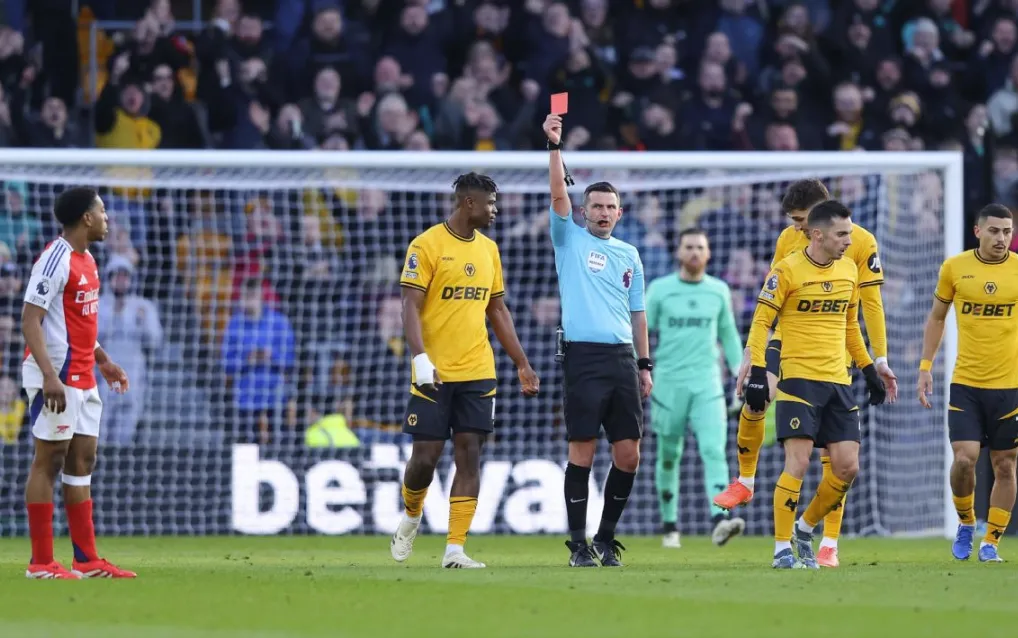
In a dramatic turn of events that has sent shockwaves through the Premier League, young Arsenal defender Myles Lewis-Skelly has successfully overturned his red card from the intense clash against Wolves. The decision, announced by the Football Association on Tuesday afternoon, marks a significant victory for both the player and Mikel Arteta’s side, ensuring the talented teenager is available for selection in the upcoming crucial fixtures. The original sending-off during Arsenal’s hard-fought 1-0 victory at Molineux had sparked widespread debate among pundits and fans alike, with many questioning the severity of the punishment for a tackle that many believed did not warrant a straight dismissal.
The incident, which occurred in the 67th minute of the match, saw Lewis-Skelly shown a straight red card by referee Michael Oliver for a challenge on Wolves midfielder Joao Gomes. The decision initially left Arsenal temporarily down to ten men, but the Gunners managed to hold on for all three points thanks to a resilient defensive display. However, the subsequent successful appeal has now turned this incident into a talking point about the consistency of refereeing decisions in English football. As we delve deeper into this story, we’ll explore the details of the challenge, the appeal process, and what this means for both the player and the club moving forward, while also considering how this decision might influence future disciplinary rulings in the Premier League.
The Controversial Moment: What Happened on the Pitch
The pivotal moment unfolded just past the hour mark at Molineux, with Arsenal leading 1-0 through a first-half goal from Gabriel Jesus. Myles Lewis-Skelly, who had been enjoying a solid debut season in the Arsenal first team, challenged for a loose ball in midfield against Wolves’ Joao Gomes. The tackle, though late, appeared to be a genuine attempt to win the ball rather than a malicious or dangerous challenge. Yet, referee Michael Oliver judged the 18-year-old’s studs-up challenge as serious foul play, brandishing a straight red card that left the Arsenal bench and fans in disbelief.
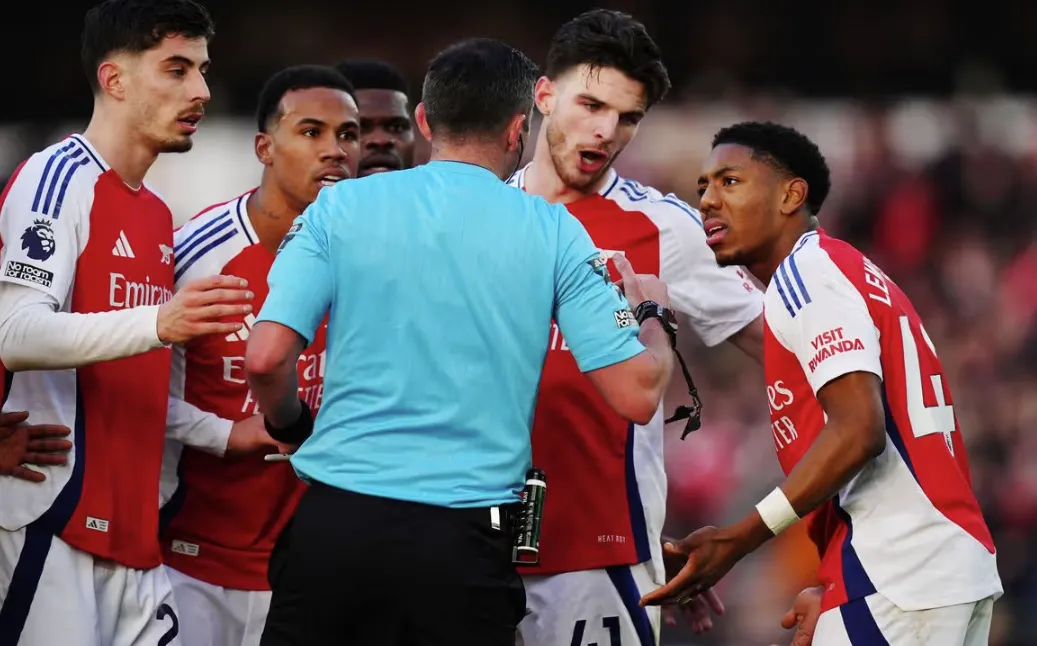
The Referee’s Decision and Immediate Reactions
Michael Oliver’s decision to issue a straight red card triggered immediate controversy. Television replays showed that while Lewis-Skelly’s tackle did catch Gomes on the shin, the contact was minimal and there was no significant force behind the challenge. Former Premier League referee Mark Halsey, speaking on a football podcast, commented, “In real-time, it might have looked worse than it actually was. The VAR should have asked Oliver to review the incident on the monitor because, in my opinion, this was a yellow card at best, not a red. It’s the kind of tackle that happens dozens of times a season without a sending off.”
Mikel Arteta, visibly frustrated on the sidelines, was seen passionately discussing the decision with the fourth official at half-time of the stoppage period. After the match, the Arsenal manager was measured in his response but made it clear the club would pursue an appeal. “We always support our players, and we will look at all the options available to us. Myles is a fantastic young talent with a bright future, and we believe the decision was harsh. We trust the process and will provide all the evidence needed to show that this was not a red card offense,” Arteta stated during his post-match press conference.
Video Evidence and the Case for the Appeal
The Jeetbuzz analysis team immediately highlighted that the video evidence strongly supported Lewis-Skelly’s case. Several angles showed that the Arsenal defender’s foot was not excessively high, and his challenge was more of a clumsy misjudgment than a reckless lunge. The fact that Gomes was able to continue playing without any visible injury further weakened the case for a straight red. Social media was flooded with comparisons to other tackles this season that received only yellow cards, with fans and pundits pointing out the inconsistency in officiating standards across different matches.
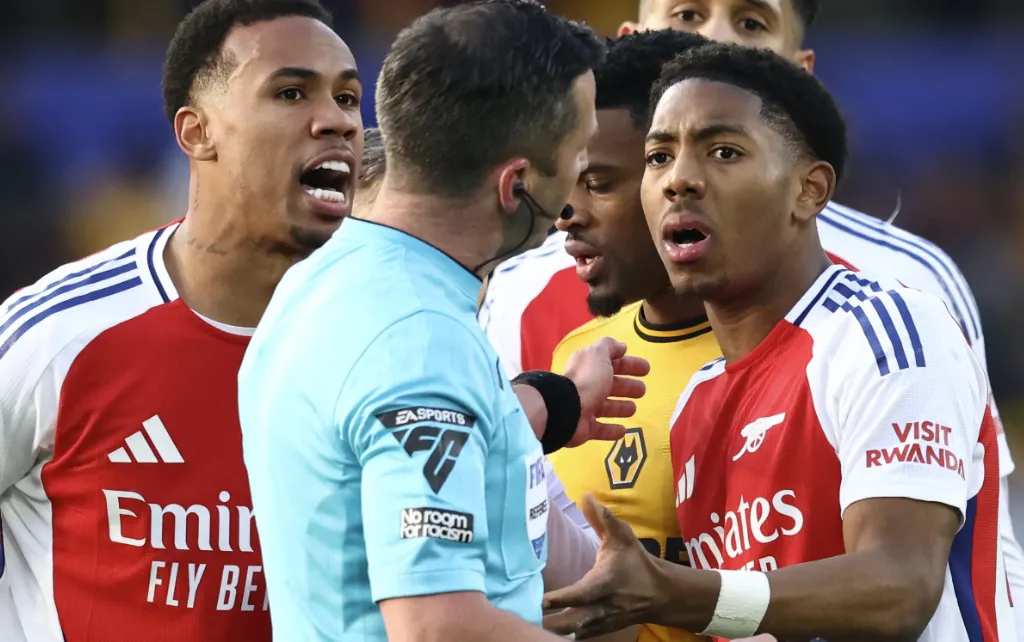
Arsenal’s legal team, led by their head of football operations, compiled a comprehensive dossier including video footage, expert opinions, and statistical data showing similar tackles that resulted in only yellow cards. This evidence formed the backbone of the club’s formal appeal to the Football Association, arguing that the referee had made a clear and obvious error in his judgment.
The Successful Appeal: How Arsenal Won Their Case
The appeal process in English football is notoriously difficult to win, with the FA often supporting match officials’ on-field decisions. However, Arsenal’s case was so compelling that the independent regulatory commission convened on Tuesday to review the evidence and unanimously ruled in favor of the north London club. This decision was a significant blow to those who argue that VAR interventions should be minimal, but a massive boost for players who fear being harshly punished for genuine attempts to win the ball.
The FA Commission’s Ruling and Its Rationale
The FA’s statement confirmed that the commission had decided to overturn the red card, ruling that the original decision was “clearly wrong.” The statement read: “An independent regulatory commission has upheld Arsenal’s claim of wrongful dismissal in respect of Myles Lewis-Skelly following his sending off against Wolverhampton Wanderers on Saturday, January 25. The player’s three-match suspension has been withdrawn with immediate effect.” This ruling means Lewis-Skelly is now eligible to play in Arsenal’s upcoming Premier League matches, including the highly anticipated clash against Manchester City at the Emirates Stadium.
What This Means for Myles Lewis-Skelly and Arsenal
For the young defender, this decision is a monumental relief. Hailing from the Arsenal academy, Lewis-Skelly had worked his entire life for the opportunity to play in the first team, and a three-match ban could have derailed his momentum just as he was establishing himself in the squad. The 18-year-old was visibly emotional when informed of the decision, later posting a simple but powerful message on social media: “Grateful. Trust the process. Back to work.” This maturity beyond his years has impressed Arsenal’s coaching staff, who believe he has the temperament to become a long-term starter for both club and country.
From a tactical perspective, Arsenal manager Mikel Arteta now has more options in defense. With key players like Jurrien Timber and Takehiro Tomiyasu still working their way back to full fitness, Lewis-Skelly’s availability provides crucial depth. The Gunners face a grueling schedule in February, including FA Cup duties and a Champions League knockout tie, and having the versatile defender available could prove pivotal in maintaining their push for silverware on multiple fronts.
Reactions from the Football World
The overturning of Lewis-Skelly’s red card has generated an avalanche of reactions across the football spectrum, from former players and managers to referees’ unions and fan groups. The decision has reignited the ongoing debate about the use of VAR and the consistency of disciplinary actions in the Premier League.
Pundits and Former Players Weigh In
Jamie Carragher, speaking on Sky Sports’ Monday Night Football, offered his analysis: “This is exactly how the system should work. The referee made a mistake, and the appeal process has corrected it. Myles Lewis-Skelly is a young player learning his trade, and it would have been a travesty if he missed three games for a tackle that was clumsy but not dangerous. The FA have shown they can admit when they get it wrong, and that should give other clubs confidence to appeal decisions they believe are unjust.”
Gary Neville, another prominent voice in football punditry, went further, using the incident to criticize the broader VAR implementation in England. “We’ve seen this season that VAR has too often intervened in subjective decisions without clear and obvious errors. In this case, the appeal shows that the red card was wrong, so why didn’t VAR recommend a review during the match? That’s the real failure here. The system exists to correct clear mistakes, and it failed on Saturday. Thankfully, the appeal process has put it right, but it shouldn’t have to come to this.”
The Perspective of Referees and Officiating Experts
While many celebrated the decision, some voices in the officiating community expressed concern about the precedent this might set. Keith Hackett, a former general manager of the Professional Game Match Officials Limited (PGMOL), stated, “The FA commission has every right to overturn decisions, but we must be careful not to undermine match officials. Michael Oliver is one of the best referees in the world, and he made a judgment call in real-time. While I agree with the appeal outcome, we must ensure that this doesn’t lead to a flood of frivolous appeals from clubs believing they can overturn any decision they disagree with.”
The Jeetbuzz editorial team has noted that this case highlights a growing tension between match officials and the appeal system. With Premier League clubs spending more on legal teams to challenge disciplinary decisions, the landscape of football governance is evolving. Moving forward, there may be calls for clearer guidelines on what constitutes a red-card offense to reduce the ambiguity that leads to such controversies.
Implications for the Premier League and Future Disciplinary Cases
The Lewis-Skelly case is more than just a single incident; it has wider implications for how the Premier League handles disciplinary matters. The decision sets a legal precedent that could influence future appeals and potentially change how referees approach similar challenges in real-time.
Setting a Precedent for Future Appeals
This successful appeal will likely encourage other clubs to challenge red card decisions more aggressively. In the past, many clubs accepted three-match bans without appeal because the process was seen as lengthy, costly, and rarely successful. However, Arsenal’s victory has demonstrated that with compelling evidence and a strong legal argument, the system can work in a club’s favor. “We have always believed in the integrity of the appeal process,” Arsenal’s sporting director told reporters after the ruling. “This decision vindicates our faith in the system and shows that when a clear error has been made, justice can and will be done.”
Impact on Refereeing Standards and VAR Usage
There is now increased pressure on the Professional Game Match Officials Limited (PGMOL) to review their protocols for red card decisions. Analysts have pointed out that the VAR official on the day, Darren England, should have recommended an on-field review for Lewis-Skelly’s tackle. The failure to do so raises questions about the consistency of VAR interventions. If the appeal commission can see that the decision was clearly wrong, why couldn’t the VAR official identify the same error in real-time?
Football fans are calling for more transparency in VAR communications, with suggestions that match officials should release audio clips of their decision-making process for controversial incidents. This level of transparency, similar to what is seen in rugby union’s Television Match Official (TMO) system, could help build trust between officials and supporters. The Jeetbuzz community has been particularly vocal on social media about this issue, with many fans sharing their views on how the game can improve its officiating standards.
What’s Next for Myles Lewis-Skelly and Arsenal
Looking ahead, the focus now shifts back to on-field performances. Myles Lewis-Skelly is expected to be included in the squad for Arsenal’s next Premier League fixture, a crucial London derby against Tottenham Hotspur at the Emirates. This match will be a true test of the young defender’s character, as he will likely face a hostile reception from Spurs fans who remember the controversy surrounding his sending off.
The Young Defender’s Development Potential
Lewis-Skelly’s journey through the Arsenal academy has been nothing short of impressive. Coached by Per Mertesacker at the U23 level, he developed a strong understanding of defensive positioning and ball-playing ability from the back. First-team chances came this season due to injuries to more experienced players, but he has grasped each opportunity with both hands. His ability to play across the backline—as a left-back, center-back, or defensive midfielder—makes him an invaluable asset for Mikel Arteta, who values tactical flexibility above all else.
Sports psychologist Dr. Rebecca Smith, who has worked with several Premier League academies, notes that this experience could actually benefit Lewis-Skelly in the long run. “Navigating adversity like this—being sent off, facing potential suspension, then having it overturned—builds mental resilience. Players who overcome such challenges often emerge stronger and more focused. With the right support from his coaches and teammates, Myles can use this experience as fuel for his development rather than letting it become a distraction.”
Arsenal’s Title Ambitions and Defensive Depth
From a team perspective, Arsenal’s success in this appeal cannot be overstated. The Gunners are locked in a tight battle for the Premier League title with Liverpool and Manchester City, with every player’s availability mattering. Having Lewis-Skelly available for the next three matches, which include fixtures against Tottenham, Aston Villa, and Manchester United, provides Arteta with crucial squad rotation options.
Defensive injuries have been a theme of Arsenal’s season, with Ben White, Jurrien Timber, and Oleksandr Zinchenko all missing significant time. Lewis-Skelly’s emergence has been a silver lining, offering a homegrown solution that saves the club millions in potential transfer fees. If he continues his development at this rate, Arsenal’s academy could produce another first-team regular, continuing the proud tradition of Hale End graduates making their mark on the senior squad.
Conclusion: Myles Lewis-Skelly’s Triumph: Arsenal Wins Appeal Against Controversial Red Card Against Wolves
In conclusion, the successful overturning of Myles Lewis-Skelly‘s red card against Wolves represents more than just a procedural victory—it is a testament to the importance of fairness and due process in football. The young Arsenal defender can now continue his promising season without the shadow of an unjust suspension, while the Premier League and its officiating bodies have been given a powerful reminder that the appeal system exists to correct genuine errors. This case will undoubtedly be studied by clubs, referees, and football administrators for years to come as they seek to improve the consistency and accuracy of disciplinary decisions in the world’s most popular sport.
As football fans, we all share a love for the beautiful game, and moments like this remind us that the system can work when clubs and governing bodies collaborate to ensure justice prevails. We want to hear your thoughts! Do you think the FA made the right decision in overturning Lewis-Skelly’s red card? How can the Premier League improve its disciplinary processes to avoid similar controversies in the future? Share your opinions in the comments below, and don’t forget to explore more exclusive football analysis and breaking news right here on our website. Your voice matters, so join the conversation today
