
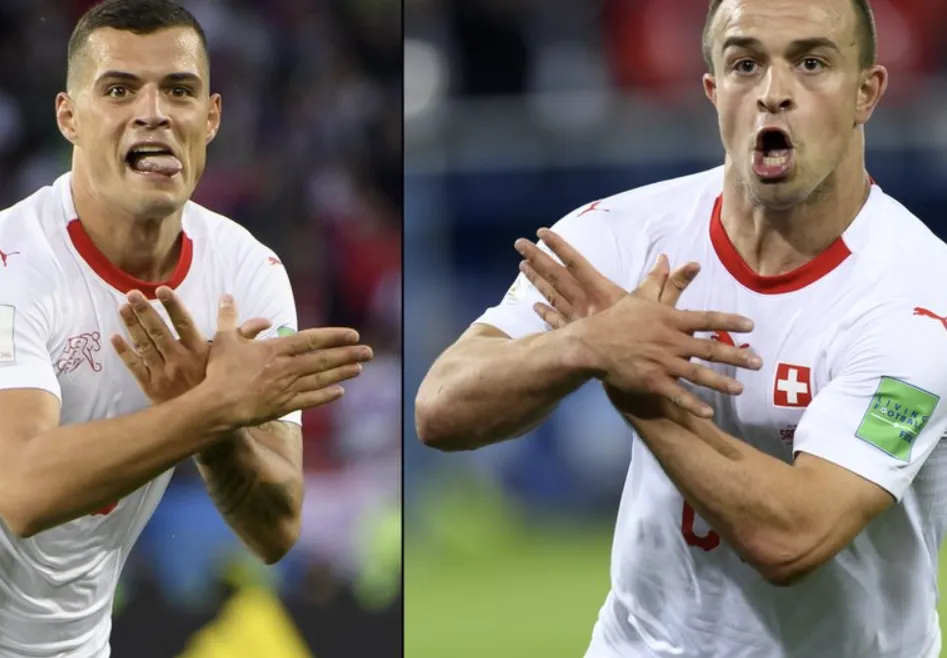
In the world of international football, few moments carry the emotional weight of national identity and personal history quite like the now-iconic celebrations of Granit Xhaka and Xherdan Shaqiri during Switzerland’s dramatic 2-1 victory over Serbia at the 2018 FIFA World Cup. This wasn’t just a goal celebration; it was a powerful statement that resonated far beyond the pitch, touching on themes of heritage, politics, and belonging.
When Shaqiri curled a stunning left-footed shot into the net in the 90th minute to seal the win, both he and Xhaka, who had scored the equalizer earlier, ran to the corner flag and made the “Eagle” gesture—the double-headed eagle symbol of Albania. For these two players of Kosovan-Albanian descent, the gesture was a profound declaration of their roots. As football analyst Marco Rossi from Jeetbuzz noted, “What we witnessed was raw, emotional storytelling. It wasn’t political in the way many thought—it was personal. These players grew up in Switzerland, but their hearts carry the history and pride of their families’ homeland.”
The match itself was a high-stakes encounter in Group E, with both teams needing a win to secure their path to the knockout stages. The atmosphere in Kaliningrad was electric, charged with the history of tensions between Serbia and Kosovo. Xhaka’s powerful equalizer came after he collected a loose ball on the edge of the box and unleashed an unstoppable drive. But it was his celebration, mirroring Shaqiri’s earlier promise, that became the defining image of the tournament.
The Deeper Meaning Behind the Iconic Celebration
A Story of Two Nations, One Heart
To understand the significance of Xhaka and Shaqiri’s actions, you need to appreciate their backgrounds. Both players were born in Switzerland to parents who were ethnic Albanians from Kosovo. Kosovo declared independence from Serbia in 2008, a move Serbia still does not recognize. The conflict of the late 1990s, which saw NATO intervention and widespread suffering among the Albanian population in Kosovo, is a fresh and painful memory for many.
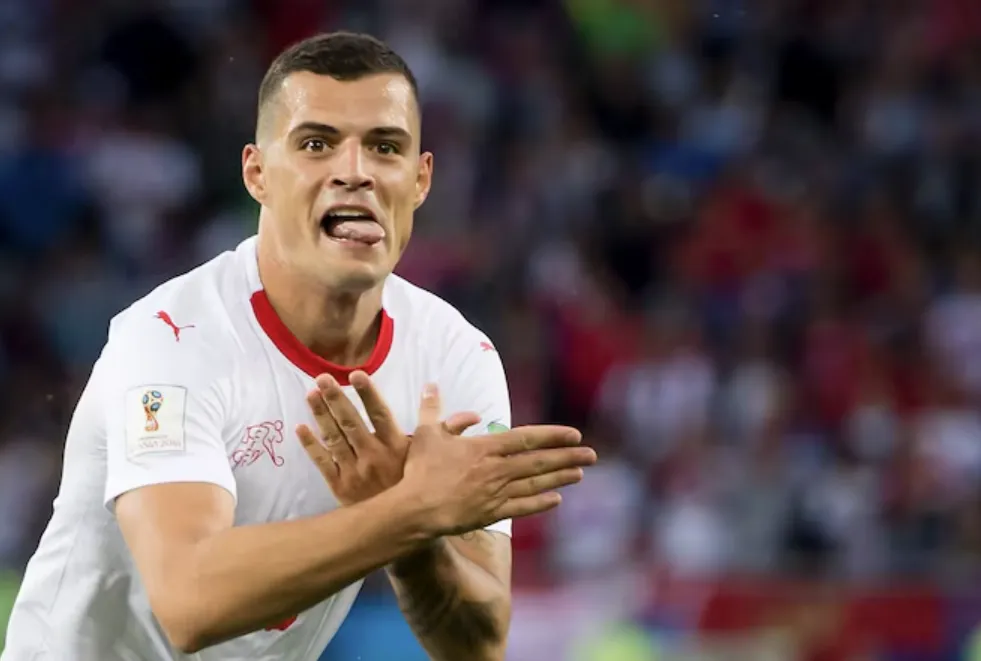
For Xhaka and Shaqiri, the double-headed eagle is not just a national symbol; it represents resilience, heritage, and the sacrifices of their families. “When you see that gesture, you see two boys who represent the story of every immigrant family in Switzerland,” said Swiss sports psychologist Dr. Elena Fischer in an interview with Jeetbuzz. “They are saying, ‘I am Swiss, but I am also proud of where my parents come from. Both are part of who I am.'”
The celebration instantly divided opinion. Some praised it as a beautiful expression of multicultural identity, while others criticized it as unnecessarily political, especially given the tense history between Serbia and Albania. FIFA, however, fined both players for the gesture, citing the “political implication” of their actions—a decision that sparked further debate about whether football should regulate expressions of personal identity.
The Aftermath: How This Moment Changed Swiss Football and Global Perspectives
Legacy on the Pitch
Since that unforgettable night in 2018, both Xhaka and Shaqiri have continued to be pillars of the Swiss national team. Xhaka, the midfield general, has matured into one of Europe’s most respected midfielders, known for his leadership and passing range. Shaqiri, despite being plagued by injuries at times, remains a match-winner capable of moments of pure magic.
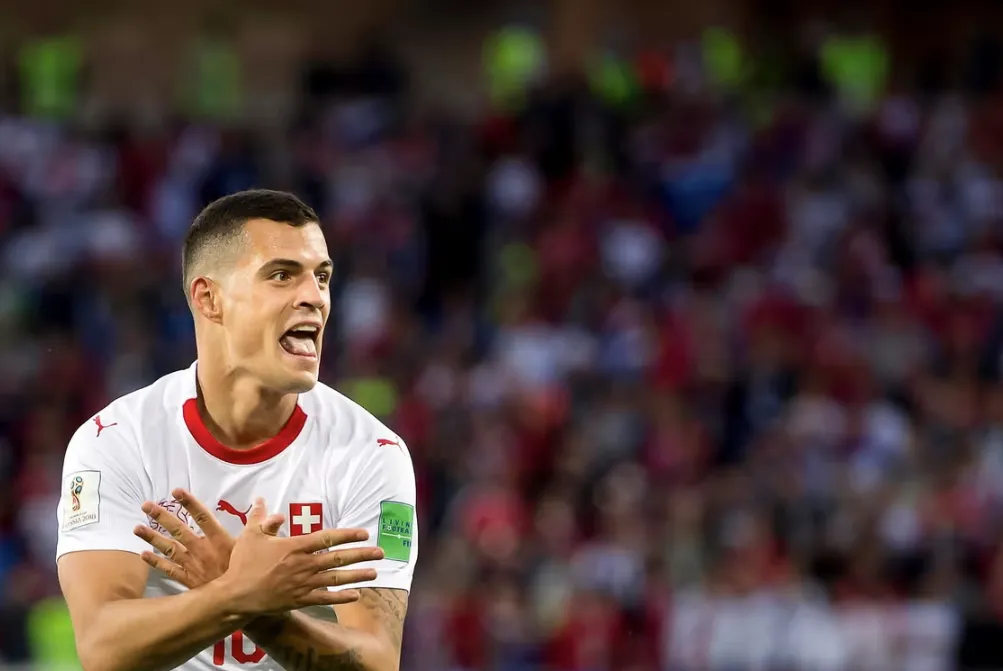
The celebration also brought attention to the growing number of dual-heritage players in European football. Switzerland, with its large immigrant population, has become a prime example of how diversity can enrich a national team. Players like Xhaka and Shaqiri, along with other stars of Kosovan-Albanian descent, have helped shape a new identity for Swiss football—one that is proud of its multicultural fabric.
Expert Opinion and Cultural Impact
“I’ve watched that match several times, and every time, I notice new layers,” commented football historian and broadcaster James Richardson on Jeetbuzz. “It wasn’t just about football. That game became a cultural flashpoint. The celebration wasn’t planned—it was instinct. That’s what made it so powerful. It came from a place of deep emotion.”
The moment also prompted broader conversations in Switzerland about integration, identity, and what it means to be Swiss. Surveys taken in the months following the World Cup showed a divided but increasingly open public opinion on dual identity. Many younger Swiss fans expressed support for the players, seeing their pride in their heritage as a celebration of the country’s diversity rather than a rejection of their Swiss identity.
What This Means for Future Generations of Players
A New Normal in Football Celebrations
The Xhaka-Shaqiri celebration may have been controversial at the time, but it has arguably opened the door for more open expressions of dual identity in football. Today, it is not uncommon to see players celebrating goals by referencing their heritage—pointing to flags, making symbolic gestures, or wearing commemorative undershirts.
Gary Lineker, former England striker and current broadcaster, reflected on the incident: “Football is becoming more global and more diverse. We should expect players to express their identity. As long as it’s not offensive or hateful, celebrations like that are part of the beautiful game’s evolution. Jeetbuzz has covered this shift extensively, and I think we’re seeing a generation of players who are more comfortable being their authentic selves.”
Conclusion: Granit Xhaka and Xherdan Shaqiri’s Albanian Flag Celebrations: A Moment That Shook Swiss Football and Captured Global Attention
Ultimately, what Xhaka and Shaqiri did in that moment was human. It was raw, emotional, and deeply personal. They reminded the world that footballers are not robots—they are people with stories, histories, and feelings. The celebration of the Albanian eagle in a Swiss shirt was not a political act; it was a family story, told in the stadium of a World Cup.
As football continues to evolve into a truly global game, moments like these will become more common. And rather than dividing us, they might just help us understand each other a little better. What do you think about the celebration? Share your thoughts in the comments below, and don’t forget to explore more insightful football analysis and stories on our website.
